Douglas Whalin late antique historian
PICERAN Post 1: introducing the project
This is the first blog post of a project titled the “The Prosopography of the Imperial Church of the Empire of the Romans in Antioch during the time of Nikon of the Black Mountain, circa AD 950-1100” (PICERAN, ID # 101208459). The project is a Marie Skłodowska-Curie Action (Horizon-MSCA), based at the University of Cologne, lasting twenty-four months from April 2026 through March 2028.
While I will have a lot of ground I hope to cover over the course of these posts, it seems sensible to me to begin with a bit of housekeeping. What is this project, why am I doing it, and what will the results be? For this first post, I’ll limit myself to an overview of the project itself, covering the research topic as well as training aspects. I will aim to keep the external project links at the bottom of the post updated throughout its duration.
PICERAN project overview
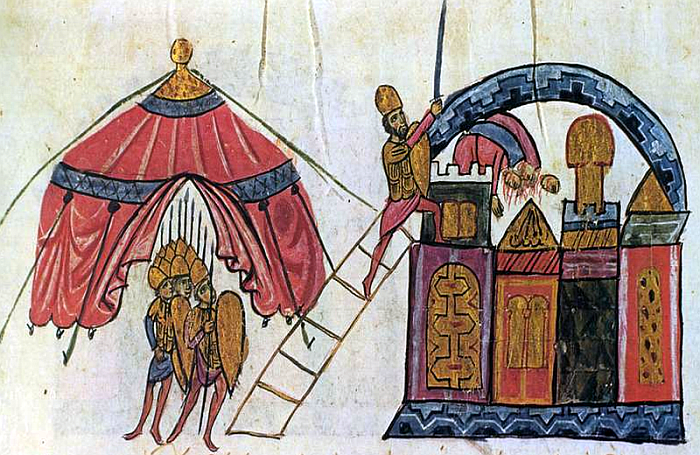
How did the community of Roman Christians in Antioch navigate the turbulent period between the city’s reconquest by the Romans in 969 and its capture by Crusaders in 1098? Throughout this period, northern Syria was a frontier society, home to diverse communities with regards to language, faith, and political loyalties. The PICERAN project aims to model the social networks of this community through building, analyzing, and mapping a novel digital prosopographic dataset. I then plan to contextualize this network analysis using the narrative structure of the life of Nikon of the Black Mountain (του Μαύρου Όρους or τοῦ Μαυρορείτου, circa AD 1025—after 1100). Nikon, one of the most prolific writers of this period, provides a framework for understanding the community structures, cultural boundaries, personal rituals, and familial networks of the people who directly experienced the momentous historical events which reshaped the history of this religious community.
PICERAN applies innovative research methods and paradigms to better understand the community dynamics of Christian believers in turn-of-the-millennium Antioch. This project exceeds past studies of medieval orthodox Christian groups with an innovative approach to conceptualizing the historical structure of the community. The ecclesiastical institutions of the Empire of the Romans were, for most of the empire’s history, more than just the patriarchate of Constantinople. They collectively formed the institutional predecessor to multiple modern Christian denominations, and so a history of any one Church would not fully encompass this historical community. This project opts for an innovative solution which avoids dividing what was a united historical community along anachronistic modern confessional boundaries by identifying the historical subject as the “Imperial Church.” The Imperial Church constituted the community of Christian believers who were in full communion with the Emperor of the Romans in Constantinople at any given historical moment. This approach has the benefit of avoiding the unfalsifiable nature of belief, instead tracking institutional affiliations. PICERAN will examine these institutions within a multi-ethnic, multi-religious, and multi-linguistic context. The Imperial Church was a diverse, polyglot community in constant exchange with other communities living in medieval Antioch, Christian and non-Christian alike.
Technical aspects
PICERAN utilizes interdisciplinary tools, combining my existing expertise in social history methods with newly trained skills in “big data” and digital network analysis. Combining multiple analytical vectors will help me to compensate partially for source biases regarding social status, gender, education, economic condition, geographical privilege, and other distortions in surviving data. Accounting for, and compensating for, source biases with regards to gender dimensions and other diversity aspects is integral to the ambitious research goal of the PICERAN project.
The project is funded by the European Research Council (ERC) through a Marie Skłodowska-Curie Action (Horizon-MSCA). These grants fund early-career research projects which incorporate both mobility and advanced training. For PICERAN, I have had to relocate from Vienna to Cologne for the period of the project, where I am undertaking advanced training in Digital Humanities (DH) tools, techniques, and methods of analysis. I consider myself technically competent in a general sense when it comes to computers and even databases (there was a time in the 2000s when I managed them for non-profit organizations), but proper DH training has certainly been an intellectually humbling experience. There are a lot of tools and approaches which didn’t exist when I finished my PhD in 2016, so I’ve had a lot of catching up to do. That, though, will have to be a topic for later posts.
Sources
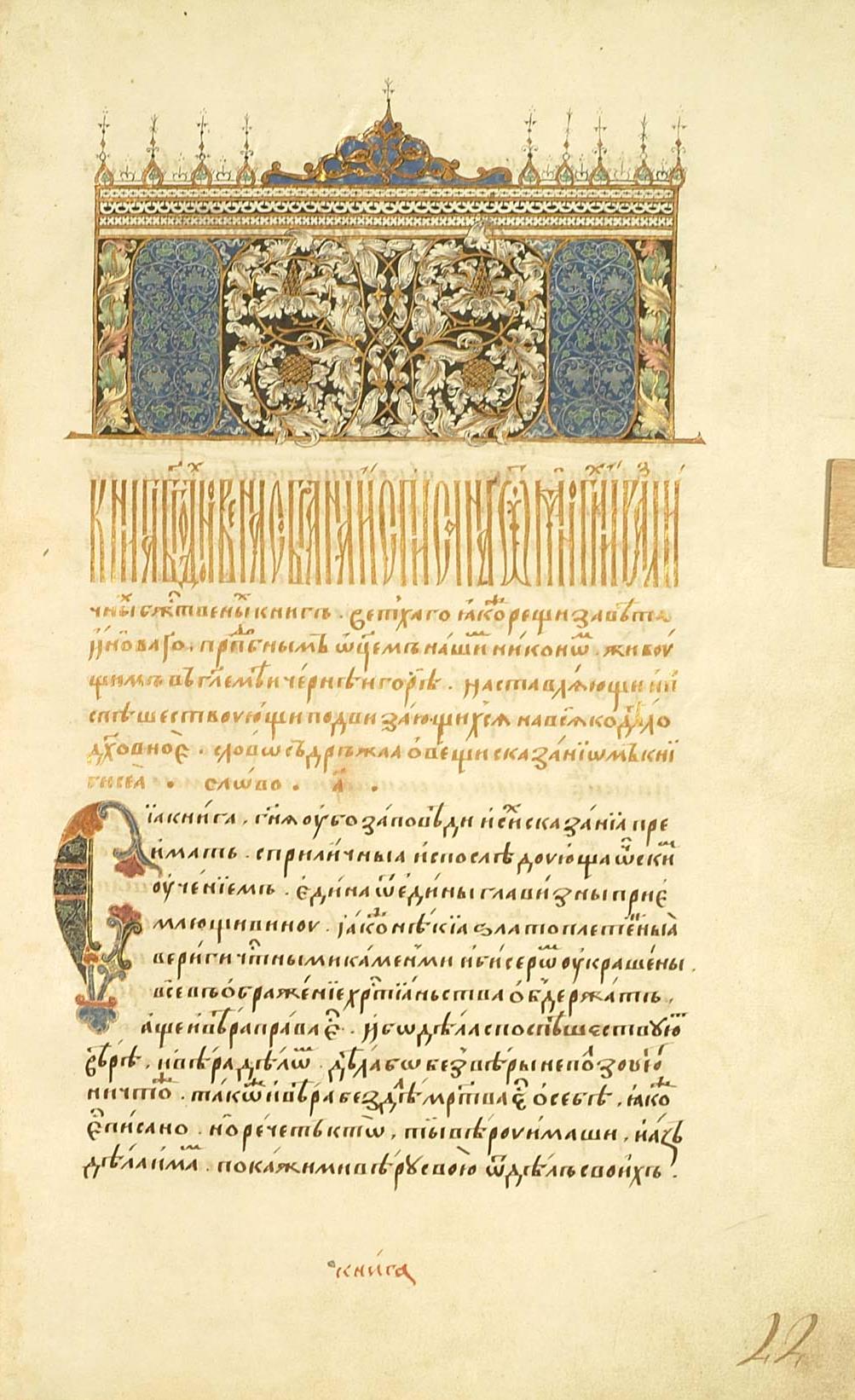 Figure 2: Early 16th century Slavonic manuscript of the Pandects of Nikon of the Black Mountain. Image by Nikolay Omonov - Own work, CC BY-SA 4.0, https://commons.wikimedia.org/w/index.php?curid=80252995
The principal body of primary source material for PICERAN are the works of Nikon of the Black Mountain. He was a prolific writer, community leader, and an exemplar for the dynamic structures of the Imperial Church and community in turn-of-the-millennium Antioch. He wrote three surviving works. The Pandects (aka Hermeneia) are a florilegium written around 1065, and were translated into Old Slavonic, Arabic and Ethiopian. It survives, in whole or in part, in over 60 manuscripts. The Mikron Biblion(, written in 1088, forms short treatise on canon law. Finally, the Taktikon, completed around 1100, collected Nikon’s monastic foundation documents (typika) and letters. At over 160,000 words the Taktikon is the largest of the texts. Portions of the Taktikon, particularly two monastic typika, have been translated into English, while the complete Greek text has been edited in a critical edition, published by Christian Hannick in 2014. The epistles in the Taktikon will provide important data for the MRA prosopography dataset, as they are the principal source for our knowledge of Nikon’s life and social networks. Nikon’s large body of surviving writings provides an anchor for the network analysis, while his biographical details will form a narrative structure around which I can interpret this analysis.
However, the prosopographical MRA dataset will comprise more than just the data from Nikon’s writings. I plan to gather a larger picture of Antiochene society by building on existing prosopographic resources. One goal in building the MRA dataset will be to avoid reduplication of past scholarly efforts. A key part of this will be implementing Linked Open Data (LOD) into the structure of the dataset. This should ensure that my dataset will build on and contribute to existing digital repositories of knowledge, ensuring that my data is findable and reproducible in a way which is both human and machine readable. At the end of the project, the contents of the MRA dataset will be made available open access and uploaded to several repositories, so that future scholarly efforts can build on my work.
External project links
- Personal research profile with the Institute for Byzantine and Modern Greek Studies, Department of Classics, Univeristy of Cologne, accessed 2026 June 24.
Key bibliographic resources
- Christian Hannick, Das Taktikon des Nikon vom schwarzen Berge: griechischer Text und kirchenslavische Übersetzung des 14. Jahrhunderts, with Peter Plank and Irénée Doens, 2 vols., Monumenta Linguae Slavicae, LXII (Weiher, 2014).
- Klaus-Peter Todt, Dukat und griechisch-orthodoxes Patriarchat von Antiocheia in mittelbyzantinischer Zeit (969–1084). Mainzer Veröffentlichungen zur Byzantinistik, 14. (Wiesbaden, Harrassowitz 2020).
- Andrea U. De Giorgi (ed.), Antioch on the Orontes. History, Society, Ecology, and Visual Culture. (Cambridge/New York: Cambridge University Press 2024).
This and other blog posts in the series is part of a project titled “The Prosopography of the Imperial Church of the Empire of the Romans in Antioch during the time of Nikon of the Black Mountain, circa AD 950-1100” (PICERAN). The project is a Marie Skłodowska-Curie Action (Horizon-MSCA), Project ID 101208459, hosted by the Institute for Byzantine and Modern Greek Studies of the Department of Classics at the University of Cologne, and is funded by the European Union 🇪🇺. The project runs from 2026 April 1 through 2028 March 31. These blog posts, like all other content on my website, are open access under a CC-BY-SA-4.0 license.
June 24th, 2026 by DC Whalin